Real problems, real results.
A selection of recent engagements.

From manual PDFs to automated, branded customer transparency.
Birchwood Automotive Group, Manitoba's largest automotive group, wanted transparency for customers and an end to manual PDF handoffs. We built the AI workflow that gets vehicle reconditioning data from the inspection system to the website, automatically.
Staff exported reconditioning PDFs from the inspection system, converted them into marketing images, and uploaded each to a SharePoint folder by hand: tedious, slow, and disconnected from Birchwood's central inventory hub.
A daily scheduled trigger scans SharePoint for new inspection PDFs; a document processing module extracts structured repair data.
Normalization and validation rules ensure schema integrity, with field mapping from PDF to the inventory hub.
Branded image generation aligned with marketing standards, plus an approval workflow, documentation, and monitoring.

Mapping workflows, then building AI solutions.
A national employee benefits provider engaged us to build AI automations and workflows within three of their core business groups, starting with HR. Each tool is built inside their own environment and handed over to their IT staff to own.
An HR team of nine spent an estimated 40 to 50 hours a week on handwritten meeting notes, typed up in the evenings. In sensitive conversations leaders had to choose between a good record and being present, and what record existed was scattered across a shared drive, the payroll system, and paper.
A secure meeting scribe: live transcription with speaker separation, two ready-to-use summaries, filed per person automatically, in person or on Teams, in three languages, with their own terminology recognized.
Built inside their own Microsoft and Azure environment, with audio auto-deleted after 30 days for interviews, employee meetings, and terminations.
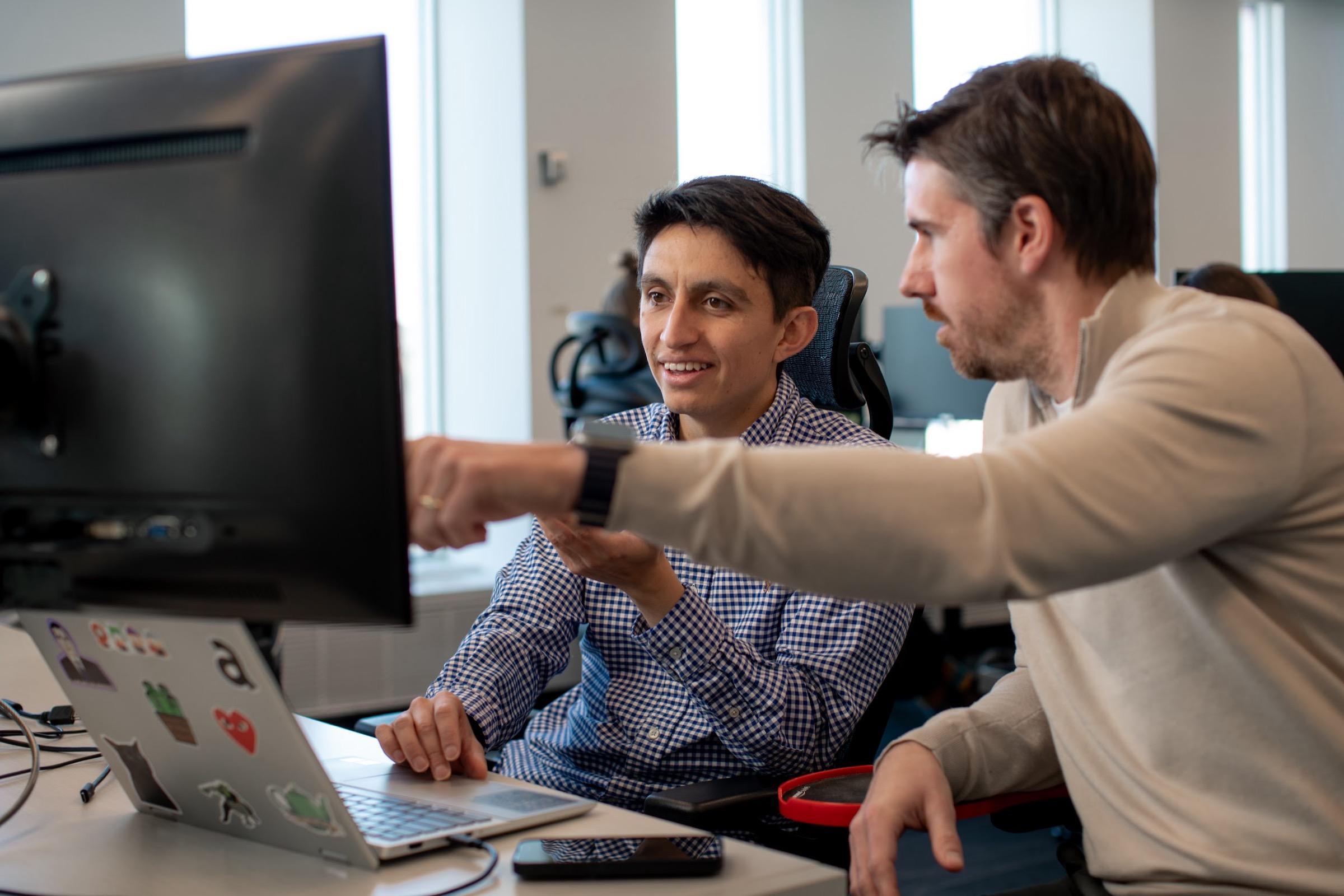
One embedded engineer, an AI-first way of working.
A global agriculture and food processing company brought one of our AI-native data engineers onto their team to accelerate data integration from an acquisition. We identified several highly manual processes prone to error and built highly effective custom AI agents as a proof of concept.
Each new customer integration can include hundreds of pages of documentation for data schema and mapping. Staff spend many hours manually ensuring the data is correct, and in a live environment, when errors occur, it can take many hours just to identify the cause.
Developed a mapping analysis agent and a production error analysis agent that cross-reference spec, JSON and EDI, then classify every finding as error, flag or pass in a section-by-section report.
Grounded in the client’s internal mapping rules and reinforced on the exact EDI versions in use, since base models know EDI generally, not these versions.
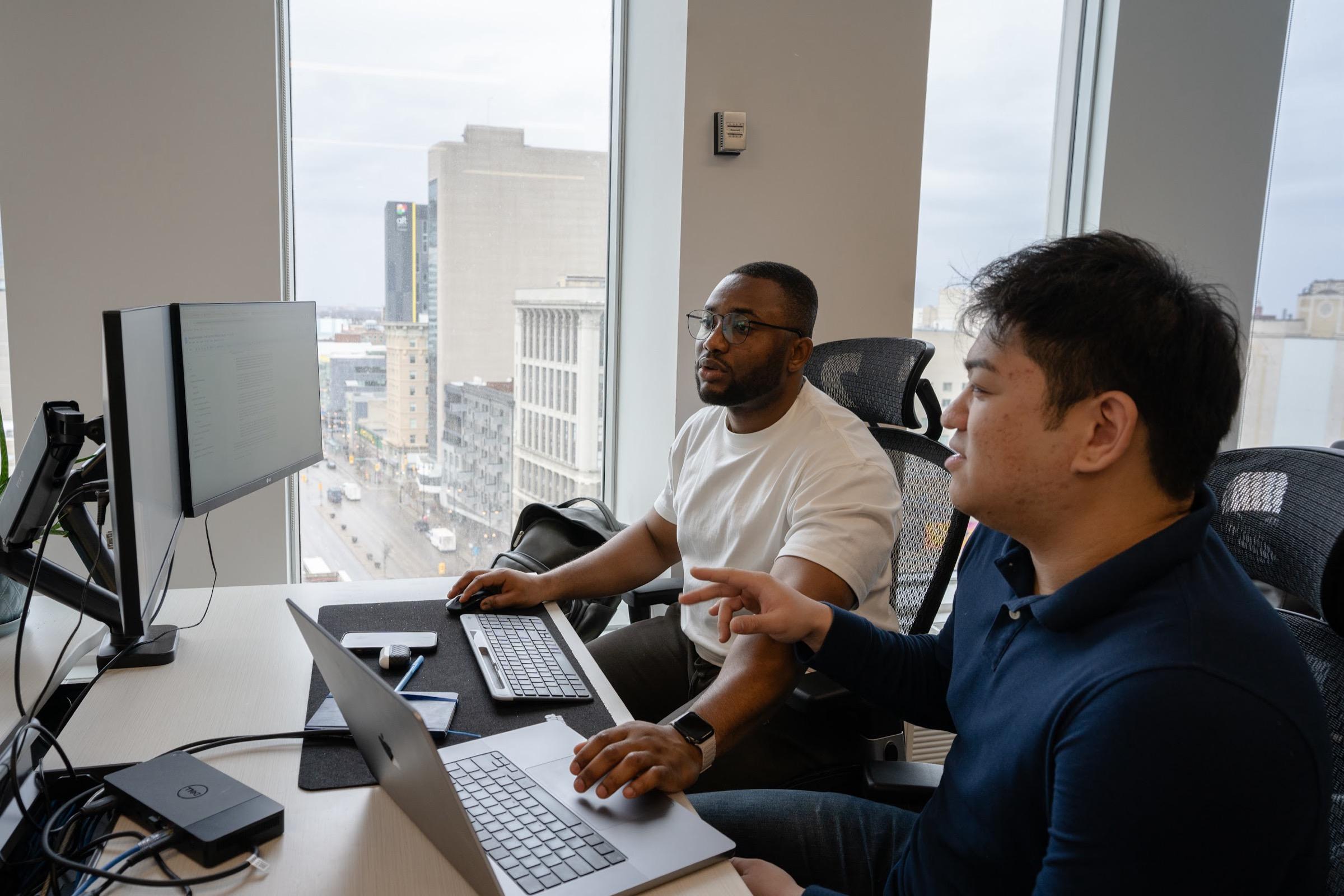
Embedding AI‑driven development inside a payroll software company.
A national payroll and HR software provider wanted a safe, structured way for developers to use AI to accelerate product development. We embedded with their team and implemented spec-driven development inside their own codebase, proving it on a real mobile feature delivered on a fixed deadline.
A national payroll and HR software provider needed a new mobile manager extension on a fixed deadline, and a safe, structured way for developers to use AI that could scale across teams. Tools alone weren't the answer.
Architecture, code, tooling, and constraints refined into a delivery plan; a solution architect and an AI-native developer embedded with dev, product, and QA.
Spec-driven development: Markdown specs feed AI tools that generate code, tests, and docs. Developers stay in control.
Tested patterns brought in: modular architecture, BFF, security and documentation guardrails; then validated outcomes and a rollout path across teams through 2027.

Building a wealth portal with AI agents.
For a top-tier US life insurance and wealth management firm, we ran an experiment: develop a modern Client Review Tool using AI agents in the roles of Product Owner, Architect, Developers, and QA, with human oversight, to see how far AI-led delivery can go inside an enterprise wealth platform.
How far can AI go inside enterprise software delivery? The client wanted to find out, by building a real wealth portal feature (Client Review preparation for advisors) using AI agents in the Product Owner, Architect, Developer, and QA roles, with humans providing direction and oversight.
Core app, authentication, theming, and metrics APIs stood up by agents; then monorepo restructure, data quality, security hardening, and access-control depth.
Modular React frontend with a NestJS backend-for-frontend: centralized auth (JWT/OAuth), role-based access control, organizational hierarchy, encryption hardening.
AI where it creates real lift: Review Prep Chat with tailored pre-meeting insights, an AI-powered packet builder, Meeting Mode, review status tracking, and PDF and chart rendering.


Customer follow-up that runs itself, end to end.
EPH Apparel, a Winnipeg-based custom menswear company, ran every order update, consult quote, and event milestone by hand across four disconnected systems. In four months we built three connected automations that send the right message at the right moment, returning roughly a week and a half of admin time every month.
Order status changes told the customer nothing, so staff fielded "where is my order?" all day. Consult follow-ups were written and priced by hand. The full event journey was tracked manually across three disconnected systems, on top of scattered, undocumented automations.
Status-triggered order emails, sent transactionally with a weekly audit so nothing slips through.
Consult follow-ups that summarize staff notes with AI, apply the discount rules, and build the quote automatically.
A lifecycle engine routing twelve statuses to the right email, internal alert, or report, plus a documented master index of every workflow.